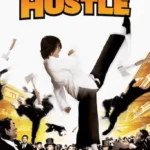
 Stephen Chow’s Kung Fu Hustle is the rare kind of movie that feels like it was made by someone who grew up loving martial arts films so much that parody wasn’t enough. Released in 2004, the film doesn’t just spoof kung fu cinema—it absorbs it, bends it, and then explodes it outward with cartoon physics, operatic violence, and a deep, sincere affection for the genre’s history. What makes Kung Fu Hustle endure is that beneath all the Looney Tunes chaos is a surprisingly heartfelt story about identity, redemption, and the quiet power of doing the right thing.
Set in a hyper-stylized version of 1940s Shanghai, the film introduces a world where martial artists are everywhere, often hiding in plain sight. The city itself feels like a comic book brought to life: grimy streets, exaggerated architecture, and characters who seem slightly larger than reality even before the fighting begins. Chow plays Sing, a small-time hustler desperate to join the notorious Axe Gang, a group whose sharp suits, synchronized dances, and brutal reputation make them feel less like criminals and more like a pop-culture myth.
Sing is not a traditional hero. He’s cowardly, selfish, and deeply insecure, constantly pretending to be something he’s not. His attempts at intimidation usually end in humiliation, and his fake toughness masks a profound sense of failure. This flawed starting point is essential, because Kung Fu Hustle is ultimately about the long, painful journey toward self-awareness. Sing doesn’t stumble into greatness; he resists it at every turn.
Much of the film’s early magic comes from its setting: the Pigsty Alley slum, a cramped, communal apartment complex that becomes the unexpected center of the story. On the surface, it’s a place of poverty and petty squabbles, ruled by a shrill landlady and her henpecked husband. But as the Axe Gang’s threat grows, Pigsty Alley reveals itself as a sanctuary for retired kung fu masters, each hiding extraordinary abilities beneath ordinary lives.
The landlady, played with explosive energy by Yuen Qiu, is one of the film’s greatest creations. Loud, domineering, and unapologetically abrasive, she feels like a caricature—until she starts fighting. Her confrontations with the Axe Gang transform slapstick into something mythic, blending wire-fu, exaggerated sound effects, and physical comedy into sequences that feel both hilarious and awe-inspiring. These battles are choreographed with meticulous care, balancing absurdity with genuine martial arts skill.
Kong Fu Hustle’s action scenes are where Chow’s vision truly shines. The fights reference decades of kung fu cinema, from Bruce Lee’s intensity to Shaw Brothers-era choreography, while also incorporating CGI and cartoon logic. Characters bounce off walls, flatten like pancakes, and recover instantly, yet the stakes never feel empty. Each fight advances the story, revealing character and escalating tension rather than existing purely for spectacle.
The villains escalate accordingly. The Axe Gang, initially played for laughs, becomes genuinely menacing as the story progresses, especially with the introduction of the Beast, a silent, feral martial arts master whose brutality strips away the film’s early whimsy. His fights are darker, more grounded, and more vicious, signaling a tonal shift that pushes Sing toward a reckoning he can no longer avoid.
At the emotional core of the film is Sing’s relationship with a mute woman known only as Fong, whose kindness and quiet strength stand in stark contrast to his insecurity and bravado. Their shared childhood memory—a lollipop, a moment of kindness, a broken promise—serves as the film’s emotional throughline. It’s a simple motif, but one that grounds the chaos in genuine feeling. Sing’s ultimate transformation isn’t about mastering a technique; it’s about reclaiming the compassion he lost.
Stephen Chow’s comedic sensibility is key to how all of this works. His humor is broad but precise, relying on timing, facial expressions, and sudden tonal shifts rather than punchlines. One moment you’re laughing at a ridiculous visual gag, the next you’re watching an operatic duel scored like a tragic ballet. The film never pauses to explain its rules; it trusts the audience to keep up.
Visually, Kung Fu Hustle is a triumph of stylization. The color palette shifts with the story’s tone, from the dusty browns of Pigsty Alley to the sleek monochrome of the Axe Gang. CGI is used boldly but intentionally, enhancing the surreal quality rather than trying to mimic realism. Even two decades later, the effects hold up because they’re designed to look unreal on purpose.
The film’s pacing is another quiet strength. It moves with confidence, knowing when to linger on a joke and when to push forward into chaos. Chow layers callbacks and running gags throughout, rewarding attentive viewers without bogging down the narrative. By the time Sing’s latent power finally emerges, it feels earned, not inevitable.
What truly sets Kung Fu Hustle apart is its sincerity. For all its absurdity, the film believes deeply in redemption. Sing’s transformation into a true martial artist isn’t about dominance or revenge; it’s about protecting others and choosing empathy over ego. That message, delivered through flying kicks and exploding walls, lands with surprising emotional weight.
Over the years, Kung Fu Hustle has become a gateway film for audiences unfamiliar with kung fu cinema, introducing classic tropes through a modern, comedic lens. At the same time, it rewards longtime fans with dense layers of homage and respect. It’s both an introduction and a love letter, accessible without being shallow.
In a cinematic landscape often split between gritty realism and hollow spectacle, Kung Fu Hustle occupies a rare middle ground. It’s wildly entertaining, technically ambitious, and emotionally sincere, unafraid to be silly and profound in the same breath. Few films manage that balance, and fewer still do it with such confidence.
Two decades after its release, Kung Fu Hustle remains endlessly rewatchable. Every viewing reveals new jokes, new visual details, and new layers of meaning beneath the chaos. It’s a film that understands the joy of movement, the power of myth, and the beauty of choosing kindness in a brutal world—all while making you laugh harder than you expect.
This post has already been read 516 times!


