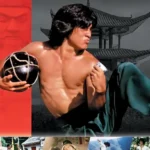
 Few martial arts films have had an impact as lasting and influential as Drunken Master. Released in 1978, the movie didn’t just solidify Jackie Chan as a global star—it fundamentally reshaped how kung fu could look, feel, and function on screen. At a time when the genre was dominated by stoic heroes and deadly-serious revenge tales, Drunken Master swaggered in sideways, wobbling, laughing, and throwing punches that landed with both physical force and comedic precision.
The film tells a loose, fictionalized story inspired by the legendary Chinese folk hero Wong Fei-hung, here portrayed not as a disciplined paragon of virtue, but as a mischievous, rebellious young man constantly testing the limits of authority. Jackie Chan’s Wong Fei-hung is talented but undisciplined, more interested in flirting, gambling, and showing off than in honoring tradition. This version of the character was a radical departure from earlier portrayals, especially those by Kwan Tak-hing, who played Wong as a near-saintly figure in dozens of films.
That subversion is the heart of Drunken Master. Chan reimagines the kung fu hero as a trickster, someone whose growth comes not from rigid obedience but from hard-earned humility. Wong’s arrogance repeatedly lands him in trouble, and the film is unafraid to let him suffer consequences. His punishment comes in the form of Beggar So, his uncle and eventual master, a cruel, eccentric teacher who embodies the old-school training ethos taken to sadistic extremes.
Beggar So, played by Yuen Siu-tien, is one of the film’s most memorable characters. Gruff, abusive, and unpredictable, he pushes Wong through humiliating and painful training exercises designed to break his ego. Their relationship is the engine of the movie, blending slapstick comedy with genuine tension. Beggar So’s methods are outrageous, but they ultimately force Wong to confront his own immaturity and recognize that talent without discipline is meaningless.
The titular drunken boxing style is introduced gradually, first as a joke and later as a revelation. Unlike traditional kung fu forms that emphasize balance and control, drunken boxing weaponizes chaos. The fighter staggers, collapses, and lures opponents into false openings, turning apparent weakness into devastating offense. Chan’s physical performance in these sequences is astonishing, requiring extraordinary control to convincingly portray imbalance without ever losing precision.
What sets Drunken Master apart from earlier martial arts films is how seamlessly it blends comedy with action. Chan doesn’t stop the fight to deliver jokes—the jokes are the fight. Every slip, stumble, and exaggerated reaction is choreographed as carefully as a kick or punch. This integration would become Chan’s signature style, but here it feels fresh, anarchic, and electric.
The film’s final act elevates everything that comes before it. Facing the villain Thunderleg, played by Hwang Jang-lee, Wong is pushed to his absolute limits. Thunderleg is a traditional kung fu antagonist—disciplined, merciless, and terrifyingly precise. His presence reintroduces real danger into a film that has spent much of its runtime being playful, and the contrast makes the climax hit harder.
To defeat Thunderleg, Wong must fully embrace drunken boxing, consuming alcohol to access its most powerful forms. The resulting fight is one of the most iconic sequences in martial arts cinema, a perfect synthesis of comedy, athleticism, and escalating tension. Chan’s movements are unpredictable yet purposeful, and the choreography builds toward a cathartic release that feels earned rather than gimmicky.
Visually, Drunken Master is grounded and functional rather than flashy. The cinematography prioritizes clarity, allowing the audience to appreciate the complexity of the choreography. Wide shots and long takes dominate, showcasing Chan’s physical prowess without relying on editing tricks. This transparency enhances the film’s impact, making every hit feel real and every fall feel dangerous.
Beyond its technical achievements, the movie’s influence is enormous. Drunken Master helped redefine the kung fu genre, opening the door for films that embraced humor, personality, and vulnerability. It paved the way for Chan’s later classics and influenced countless action-comedy hybrids across the world, from Hong Kong cinema to Hollywood blockbusters.
The film also reframed the idea of mastery. Wong doesn’t become great by abandoning his personality; he becomes great by refining it. His playfulness, creativity, and adaptability—once seen as flaws—become his greatest strengths when tempered by discipline. This philosophy resonates beyond martial arts, offering a universal lesson about growth and self-awareness.
There’s also an undercurrent of rebellion in Drunken Master that speaks to generational tension. Wong’s defiance of authority isn’t portrayed as pure arrogance but as a response to rigid systems that fail to nurture individuality. The film ultimately argues for balance: respect for tradition without blind obedience, innovation without disrespect.
Over four decades later, Drunken Master remains endlessly watchable. Its humor still lands, its action still dazzles, and its emotional arc still feels authentic. While later entries in the series and genre may have escalated the spectacle, few have captured the same sense of discovery and joy found here.
In the pantheon of martial arts cinema, Drunken Master stands as a turning point—a film that proved kung fu could be funny without being frivolous, athletic without being cold, and entertaining without sacrificing heart. It’s a celebration of physical storytelling at its most inventive, and a reminder that sometimes the most powerful path forward is the one that looks the most unsteady.
This post has already been read 545 times!


