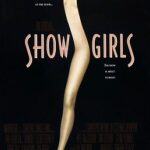
 When Showgirls hit theaters in September 1995, it arrived with enormous expectations and even bigger controversy. Directed by Paul Verhoeven and written by Joe Eszterhas, the film was supposed to be a bold, provocative drama exposing the dark side of Las Vegas entertainment culture. Instead, it became one of the most ridiculed movies ever made. Critics destroyed it, audiences laughed at it, and it quickly turned into a symbol of Hollywood excess and creative self-destruction.
Yet over the years, Showgirls has undergone one of the strangest re-evaluations in movie history. What was once considered a catastrophic failure is now viewed by many as a camp masterpiece, a misunderstood satire, or at the very least one of the most endlessly entertaining disasters ever put on film. Whether you love it, hate it, or laugh at it, Showgirls remains impossible to ignore.
At its core, the movie follows Nomi Malone, played by Elizabeth Berkley, a drifter who hitchhikes her way into Las Vegas hoping to become a star dancer. Nomi starts at a seedy strip club before setting her sights on becoming the lead dancer in the glamorous stage show “Goddess.” Along the way she encounters betrayal, exploitation, jealousy, manipulation, and more melodrama than an entire season of daytime television packed into two hours.
The plot itself is not especially unique. In many ways, Showgirls follows the classic “rise to fame” formula seen in countless Hollywood stories. The difference is in the execution. Everything in this movie is turned up to an absurd level. The dialogue is outrageous, the performances are wildly exaggerated, and every emotional moment feels like it was designed with maximum intensity in mind. No one in Showgirls simply gets angry—they scream. No one simply dances—they attack the stage like they’re in a combat zone.
That exaggerated style is exactly why the movie has survived.
Elizabeth Berkley deserves credit for fully committing to the role. At the time, she was best known as Jessie Spano from Saved by the Bell, and Showgirls was meant to reinvent her as a serious adult actress. Unfortunately for Berkley, Hollywood largely blamed her for the film’s failure, even though the movie’s problems extended far beyond any one performance. Looking back today, her fearless commitment is actually one of the film’s strengths. She throws herself into every scene with such manic intensity that it becomes mesmerizing. Nomi is unpredictable, explosive, and often completely irrational, but Berkley never phones anything in.
In fact, nearly every actor in the movie appears to be performing in a completely different film. Kyle MacLachlan plays entertainment director Zack Carey with a bizarre mixture of sleaze and cartoon villain energy. Gina Gershon absolutely steals scenes as Cristal Connors, the glamorous star performer who alternates between mentor, rival, and seductress. Gershon seems to understand exactly what kind of movie she’s in, and her over-the-top confidence fits perfectly with Verhoeven’s heightened style.
Visually, Showgirls is undeniably impressive. Verhoeven shoots Las Vegas as a neon-drenched fever dream where glamour and corruption exist side by side. The production design is lavish, the costumes are elaborate, and the stage performances are filmed with genuine spectacle. Whatever else can be said about the movie, it never looks cheap. Every frame feels oversized, loud, and aggressively excessive.
That excess extends to the movie’s sexuality, which became one of the biggest points of controversy upon release. Showgirls was the first major studio film to receive an NC-17 rating, and the marketing campaign leaned heavily into its explicit content. The film contains constant nudity and several graphic sexual situations, but what shocked audiences most was not necessarily the amount of sex—it was how strange and uncomfortable many of the scenes felt. The infamous swimming pool sequence, in particular, has become legendary for all the wrong reasons. It is impossible to watch without either cringing or laughing.
But beneath all the outrageousness, there is an argument to be made that Verhoeven intentionally crafted the movie as satire. Like his earlier films RoboCop and Starship Troopers, Showgirls may have been designed as an exaggerated critique of American obsession with sex, fame, greed, and entertainment. The problem is that the satire is buried under such overwhelming excess that many viewers could not tell whether the movie was mocking exploitation or simply indulging in it.
That ambiguity is a major reason the film remains fascinating. Was Verhoeven making a deliberate camp satire? Was he accidentally creating comedy while aiming for serious drama? The answer probably lies somewhere in between. Either way, the result is hypnotically watchable.
The dialogue deserves special mention because it is genuinely unforgettable. Joe Eszterhas reportedly received one of the largest screenwriting paychecks in Hollywood history for the script, and the final product contains lines that have become iconic examples of cinematic absurdity. Conversations in Showgirls rarely resemble how real human beings speak. Characters constantly deliver bizarre one-liners with deadly seriousness, creating moments that feel unintentionally hilarious. Yet somehow, those ridiculous lines have helped the movie endure. People still quote Showgirls decades later precisely because the dialogue is so outrageous.
The film’s reputation also changed because home video gave audiences a chance to experience it differently. In theaters, audiences expected an erotic prestige drama and were disappointed. On VHS and DVD, viewers discovered it worked beautifully as camp entertainment. Midnight screenings became popular, fans began celebrating its insanity, and the movie slowly transformed into a cult classic. Today, Showgirls has an audience that genuinely adores it.
That does not mean the movie is secretly flawless. Far from it. The pacing drags in places, the emotional shifts are often nonsensical, and the film handles certain darker material with an uncomfortable lack of sensitivity. There are moments where the movie’s attempt at social commentary completely collapses under its own excess. Even supporters of Showgirls usually admit it is messy, chaotic, and often unintentionally funny.
Still, there is something admirable about how fearless the film is. Modern studio movies often feel sanitized and carefully calculated to avoid risk. Showgirls is the opposite of safe. Every creative decision swings for the fences, even when those swings miss spectacularly. The movie is alive in a way many technically superior films are not.
It is also impossible to separate Showgirls from its place in 1990s Hollywood culture. The film represented a moment when studios were willing to gamble massive budgets on provocative adult-oriented material. Its failure terrified Hollywood executives and contributed to the decline of NC-17 studio filmmaking. In that sense, Showgirls became a cautionary tale that changed the industry.
Ironically, the movie’s cultural legacy eventually became more important than the film itself. What was once mocked as cinematic garbage is now studied in film courses, celebrated at revival screenings, and defended by critics who see deeper themes beneath the camp. Very few movies experience such a dramatic reversal of reputation.
Watching Showgirls today is a unique experience because it operates on multiple levels simultaneously. It is bad, but entertainingly bad. It is excessive, but deliberately excessive. It is exploitative, yet arguably critical of exploitation. It is ridiculous, yet strangely compelling. Few films generate such conflicting reactions.
Ultimately, Showgirls succeeds not because it is traditionally “good,” but because it is unforgettable. Hollywood produces countless bland failures that disappear immediately. Verhoeven’s film survived because it committed so fully to its bizarre vision that audiences could never completely dismiss it. Whether viewed as satire, camp, disaster, or cult art, Showgirls remains one of the most fascinating movies ever made about fame, ambition, and the seductive ugliness of Las Vegas.
It may not be a masterpiece in the conventional sense, but it is absolutely a cinematic experience. And three decades later, people are still talking about it. That alone says something powerful about the strange endurance of Showgirls.
This post has already been read 231 times!


