
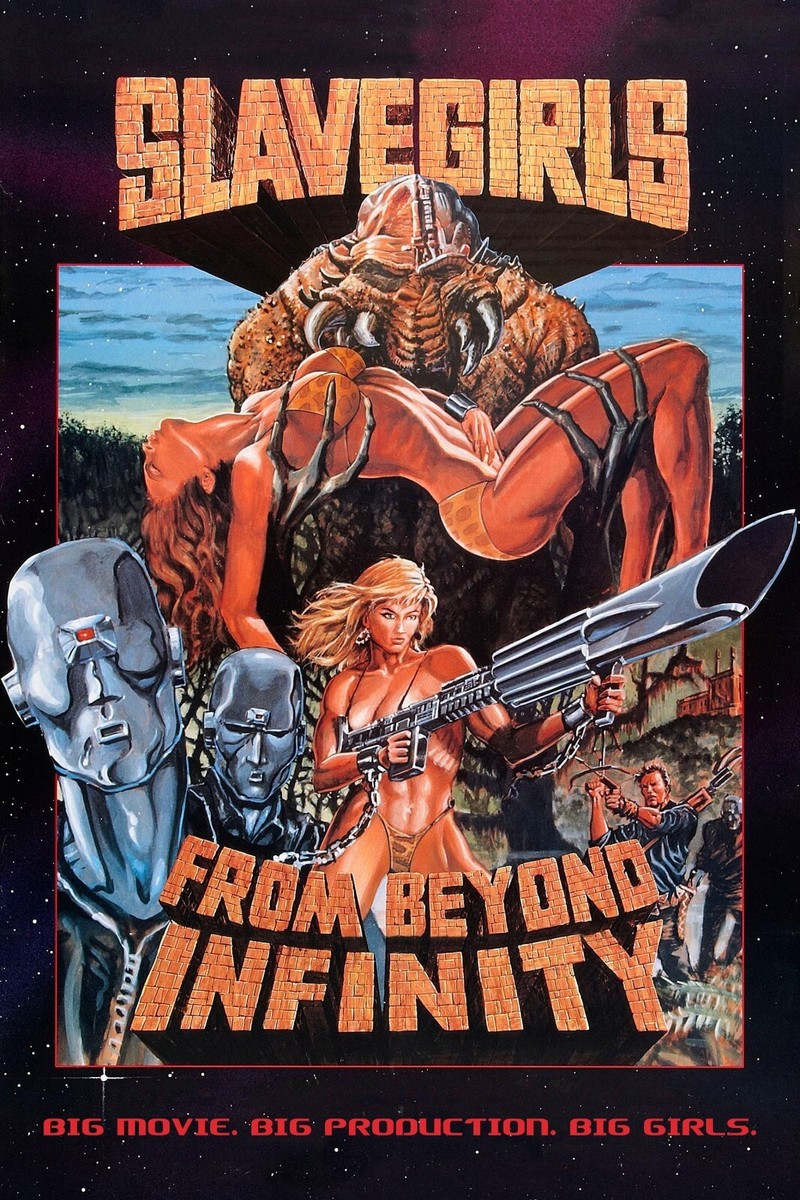
There are bad science-fiction movies, there are gloriously terrible science-fiction movies, and then there's Slave Girls from Beyond Infinity, the 1987 exploitation adventure that sounds like it was conceived by someone who found a stack of old pulp magazines, a bikini catalog, and a copy of The Most Dangerous Game and decided to combine everything before lunch. The result is a wonderfully ridiculous slice of '80s B-movie cinema that promises intergalactic adventure, killer robots, alien monsters, and a title that wastes absolutely no time explaining its priorities.
Directed by Ken Dixon, the film follows Daria and Tisa, two women who escape from a space prison and crash-land on a mysterious planet. There, they encounter Zed, a peculiar host who offers them shelter in his elaborate fortress. Naturally, accepting hospitality from a strange man living on an isolated alien world turns out to be a terrible idea. Apparently, even in the distant future, nobody has learned not to trust strangers with suspiciously large trophy collections.
Zed, played by Don Scribner, enjoys hunting intelligent beings for sport. His guests soon discover that their luxurious accommodations are merely a temporary waiting room before becoming contestants in the world's most unpleasant outdoor recreational activity. It's essentially The Most Dangerous Game with spaceships, robots, and considerably less interest in formal evening wear.
The plot isn't exactly breaking new ground. A mysterious villain hunting helpless visitors has been a reliable thriller premise for decades. The science-fiction setting adds some novelty, but the movie's imagination seems to operate on a strict budget. Alien landscapes, futuristic weapons, and mechanical henchmen appear alongside production choices that occasionally suggest the entire galaxy was constructed in somebody's garage.
And honestly, that's part of the charm.
The special effects are unmistakably low-budget, the dialogue occasionally sounds like it was translated from English into English, and the acting ranges from earnest to wonderfully wooden. Yet there's something entertaining about watching a film commit so enthusiastically to its own absurdity. Nobody seems particularly interested in convincing us that this is a realistic vision of the future. Humanity has apparently mastered interstellar travel while remaining hopelessly dependent on questionable costumes and extremely suspicious dinner invitations.
Elizabeth Kaitan and Cindy Beal lead the adventure as Daria and Tisa, while Brinke Stevens adds another familiar face for fans of vintage exploitation cinema. The women eventually demonstrate resourcefulness and determination as they attempt to survive Zed's deadly game. At least the film understands that its protagonists should do more than wander around looking confused while the scenery threatens to fall apart.
The movie does struggle with pacing, and its combination of science fiction, exploitation, and jungle adventure doesn't always blend smoothly. Some scenes feel padded, certain performances lack energy, and the suspense occasionally disappears beneath the sheer silliness of the production. Still, expecting polished cinematic brilliance from a movie called Slave Girls from Beyond Infinity would be like ordering a gourmet meal at a gas station and complaining about the silverware.
Ultimately, this is precisely the kind of movie that gives cult cinema its appeal. It's cheap, eccentric, occasionally ridiculous, and completely representative of an era when filmmakers could turn an outrageous concept into a feature-length adventure without worrying too much about whether the final product made sense.
Review posted
October 28, 2026