
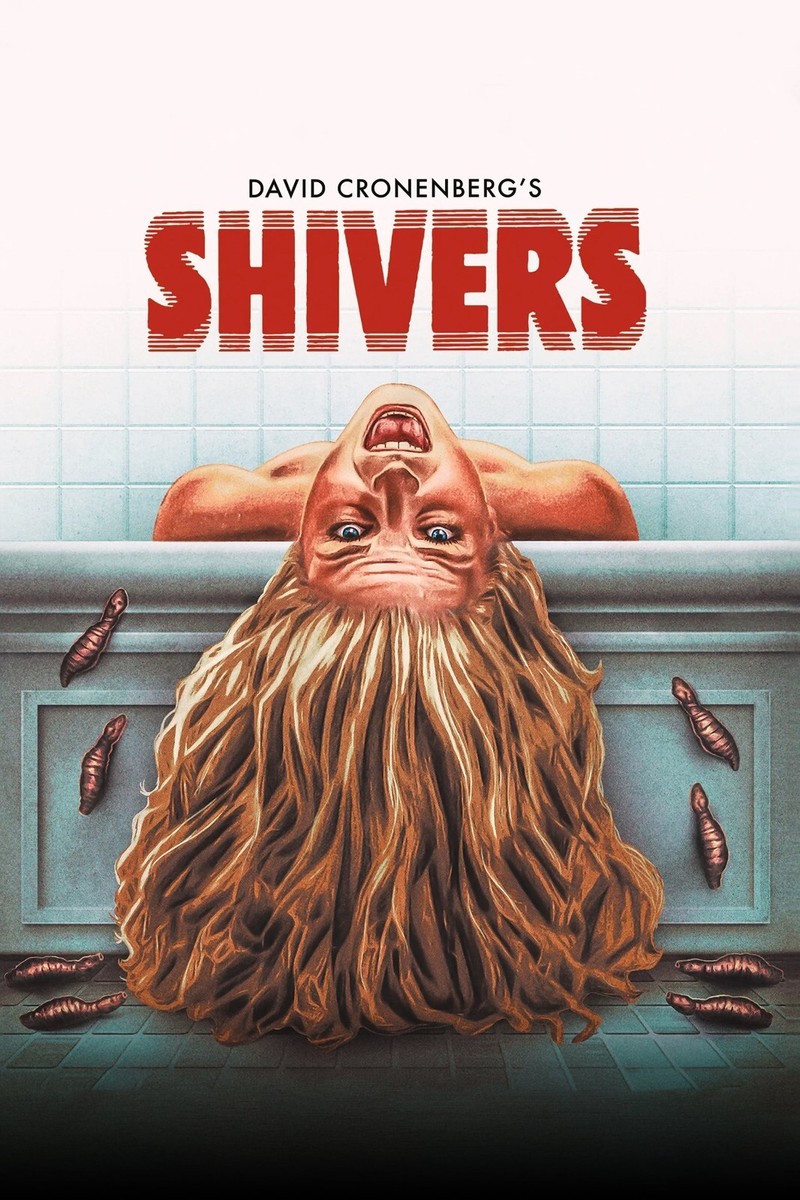
What could possibly make apartment living more unpleasant than noisy neighbors, questionable plumbing, and somebody constantly stealing your parking space? How about a building full of residents infected with sexually transmitted parasites that turn them into uncontrollably horny lunatics? Welcome to Shivers (1975), David Cronenberg's wonderfully disturbing early horror film, which takes the concept of community living and transforms it into a biological nightmare. Suddenly, that annoying neighbor knocking on your door doesn't seem quite so bad.
Originally released as The Parasite Murders in some markets, the film takes place inside the Starliner Towers, a luxurious apartment complex designed to provide residents with a comfortable, self-contained lifestyle. Unfortunately, the building's reputation for upscale living is about to take a serious hit thanks to a medical experiment gone horribly wrong.
A scientist named Dr. Emil Hobbes has developed a parasite designed to replace failing human organs. Unfortunately, his creation has slightly different ideas about its intended purpose. Rather than politely helping people live longer, the creatures spread throughout the building, infecting residents and turning them into sexually aggressive hosts. Apparently, somebody forgot to include a section about unintended consequences in the research proposal.
Paul Hampton stars as Dr. Roger St. Luc, a physician who becomes increasingly concerned as the infection spreads through the building. He's soon investigating mysterious deaths, bizarre behavior, and a growing number of residents who seem to have completely abandoned the concept of personal boundaries. His wife, played by Lynn Lowry, also becomes caught up in the increasingly disturbing situation.
The premise is completely ridiculous, but Cronenberg approaches it with the straight-faced seriousness of a medical documentary. There are no heroic speeches about saving humanity or elaborate explanations about the importance of friendship. Instead, we get a building full of people behaving like they've collectively lost their minds, while a handful of increasingly desperate individuals attempt to understand what's happening.
The practical effects are wonderfully slimy and uncomfortable. The parasites themselves resemble small, wriggling biological nightmares, and their ability to spread through the building creates an atmosphere of genuine paranoia. Nobody is particularly safe, and the film makes excellent use of its confined apartment setting. After all, there's nowhere particularly convenient to run when the entire building has become infected.
Of course, Shivers is not exactly subtle. Cronenberg uses the parasites as a vehicle for exploring sexuality, repression, bodily autonomy, and humanity's less civilized instincts. The movie is packed with disturbing imagery, uncomfortable situations, and enough sexualized horror to make an apartment building's management company immediately cancel its advertising campaign.
The acting is functional, although the characters aren't especially complicated. Most residents exist primarily to become infected, spread the parasites, or provide another opportunity for Cronenberg to make audiences feel deeply uncomfortable. The dialogue occasionally feels stiff, but the bizarre atmosphere more than compensates.
What makes Shivers particularly interesting is how confidently it introduces the themes that would become central to Cronenberg's later work. The human body is treated as something unpredictable, vulnerable, and occasionally downright disgusting. It's not exactly the sort of movie that encourages you to appreciate your own biology.
Final Verdict: Shivers is a bizarre, disturbing, and surprisingly influential piece of 1970s body horror. It's rough around the edges, occasionally ridiculous, and certainly not something to watch while eating dinner. But its combination of sexual paranoia, biological horror, and Cronenberg's fascination with the human body makes it a memorable experience.
Forget worrying about property values. If your apartment building starts producing sexually aggressive parasites, it's probably time to break your lease. And maybe disinfect the elevator.
Review posted
October 30, 2026