
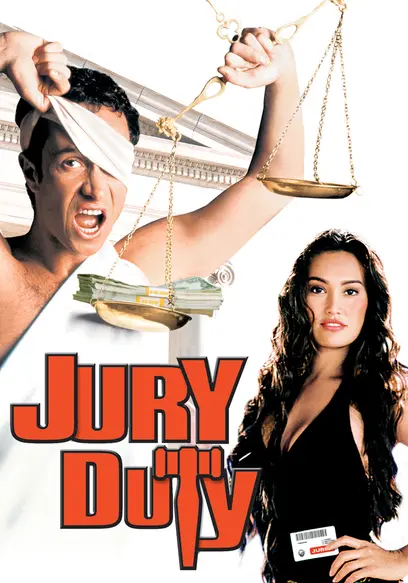
Jury Duty, released in 1995, is a courtroom comedy that attempted to blend satire with slapstick humor, anchored by Pauly Shore's distinctive comedic style. Directed by John Fortenberry and penned by Neil Tolkin, Barbara Williams, and Samantha Adams, the film sought to capitalize on Shore's mid-90s popularity. Despite its ambitions, Jury Duty faced critical panning and underwhelming box office returns. Let's explore the film's plot, production, reception, and its place in 90s comedy cinema.
Plot Overview
Tommy Collins (Pauly Shore) is an unemployed male stripper living with his mother (Shelley Winters) in a trailer park. When his mother and her boyfriend decide to elope to Las Vegas, taking their mobile home with them, Tommy finds himself homeless. In search of free accommodation, he discovers a discarded jury duty summons and decides to serve, lured by the promise of a hotel stay and a daily stipend.The Austin Chronicle+7Rotten Tomatoes+7Wikipedia+7Wikipedia
Assigned to a high-profile murder trial involving Carl Wayne Bishop, a fast-food worker accused of killing several colleagues, Tommy is sequestered with other jurors. Relishing the comforts of the hotel, he deliberately prolongs the deliberations to extend his stay. However, as the trial progresses, Tommy uncovers inconsistencies in the evidence, leading him to believe in Bishop's innocence. His amateur sleuthing ultimately reveals the true murderer, vindicating Bishop.Turner Classic Movies+5Wikipedia+5FilmAffinity+5Wikipedia+2Turner Classic Movies+2FilmAffinity+2
Production Details
Director: John Fortenberry
Writers: Neil Tolkin, Barbara Williams, Samantha Adams
Producer: Yoram Ben-Ami, Peter M. Lenkov
Music: David Kitay
Cinematography: Avi Karpick
Editing: Stephen Semel
Studio: Triumph Films
Distributor: TriStar Pictures
Runtime: 88 minutes
Budget: $21 million
Box Office Gross: Approximately $17 millionWikipedia+6Soundeffects+6Wikipedia+6Box Office Mojo+5Wikipedia+5Soundeffects+5Wikipedia+1FilmAffinity+1
Cast
Pauly Shore as Tommy Collins
Tia Carrere as Monica
Stanley Tucci as Frank
Brian Doyle-Murray as Judge Powell
Shelley Winters as Mrs. Collins
Abe Vigoda as Jed
Critical Reception
Jury Duty was met with overwhelmingly negative reviews. On Rotten Tomatoes, it holds a 0% approval rating based on 14 reviews, indicating universal disapproval. Renowned critic Roger Ebert criticized Shore's performance, likening it to "long fingernails, drawn very slowly and quite loudly over a gigantic blackboard." The film's humor, largely reliant on Shore's antics, failed to resonate with audiences and critics alike
Box Office Performance
Despite Shore's previous box office successes, Jury Duty underperformed financially. With a production budget of $21 million, it grossed approximately $17 million domestically, failing to recoup its costs. This decline marked a downturn in Shore's cinematic appeal, as his subsequent films continued to see diminishing returns.Wikipedia+1todayshaul.net+1
Legacy and Cultural Impact
Jury Duty is often cited as a low point in 90s comedy cinema. Its failure contributed to the waning of Pauly Shore's film career, leading him to explore other avenues, including stand-up comedy and television. While the film attempted to satirize the legal system and jury process, its execution fell short, leaving it as a cautionary tale of misaligned comedic vision.
Conclusion
Jury Duty serves as a snapshot of mid-90s comedy, reflecting the era's penchant for slapstick and character-driven humor. However, its lackluster script and overreliance on Shore's persona resulted in a film that failed to leave a lasting impression. Today, it stands as a testament to the challenges of sustaining comedic relevance and the importance of evolving with audience tastes.
Review posted
October 22, 2026