
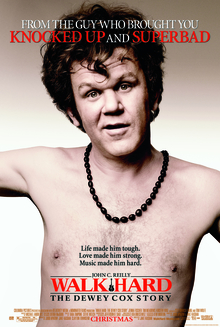
Hollywood loves making serious musical biopics. Give audiences a troubled musician, a difficult childhood, a rise to fame, substance abuse, relationship problems, and a dramatic comeback, and suddenly you've got an awards-season contender. Walk Hard: The Dewey Cox Story takes every one of those clichés, throws them into a blender, and produces one of the funniest musical comedies of the 2000s.
Starring John C. Reilly as fictional rock legend Dewey Cox, the movie follows an aspiring musician whose life becomes an increasingly ridiculous parade of tragedy, fame, excess, and questionable decisions. The story begins with a childhood accident involving a machete and the accidental death of his brother. It's an event that will haunt Dewey forever, although the movie makes it clear that his emotional response might be slightly more complicated than a normal person would expect.
After discovering his musical talent, Dewey leaves home and begins building a career that takes him through the blues, rock and roll, folk, country, psychedelia, and practically every other musical trend imaginable. Along the way, he encounters legendary musicians, develops destructive habits, marries multiple women, and somehow manages to become one of the most influential artists in music history.
The movie is essentially a parody of films such as Walk the Line and Ray, although it also takes shots at the entire musical biopic genre. The familiar scenes are all there: the childhood trauma, the early musical breakthrough, the difficult relationships, the drug-fueled breakdown, and the eventual redemption. The difference is that nearly every dramatic moment is pushed so far beyond reasonable limits that it becomes impossible to take seriously.
John C. Reilly is fantastic as Dewey. He's completely committed to the character, whether he's performing a heartfelt ballad or delivering some of the most ridiculous dialogue imaginable. What makes the performance especially impressive is that Reilly can actually sing. The movie's musical numbers aren't simply jokes with background music; many of them are genuinely entertaining songs that could easily pass for material from the eras they're parodying.
Jenna Fischer plays Darlene, Dewey's first wife and one of the few people who genuinely understands him. Kristen Wiig, Tim Meadows, and Raymond J. Barry provide additional comic support, while several familiar faces appear as musicians and industry figures. Jack White makes a particularly memorable appearance as Elvis Presley, although his performance is considerably more entertaining than it has any right to be.
The movie's greatest strength is its attention to musical detail. The songs change styles as Dewey's career progresses, and the production recreates different musical eras with impressive accuracy. There are performances that sound like early rock and roll, psychedelic experimentation, folk protest music, and arena rock. The joke is that Dewey seems to be responsible for inventing all of it.
Director Jake Kasdan and writer Judd Apatow understand that the parody works best when the movie treats its absurd situations with complete seriousness. The more ridiculous things become, the more committed everyone seems to be. The result is a comedy that manages to be both a loving tribute to music history and a merciless attack on the conventions of Hollywood storytelling.
The film didn't become a major box-office success, which is unfortunate because it deserved a much larger audience. Its humor is occasionally crude, but the writing is clever, the performances are excellent, and the soundtrack is surprisingly strong.
Final Verdict: 8.5/10
Walk Hard: The Dewey Cox Story is one of the funniest music-related comedies ever made. John C. Reilly delivers a terrific performance, the songs are genuinely entertaining, and the movie absolutely destroys the musical biopic formula. It's a film that can make fun of Johnny Cash, Ray Charles, Bob Dylan, and just about every other music legend without losing its affection for the music itself. And remember: you don't want none of this, Dewey.
Review posted
November 10, 2026