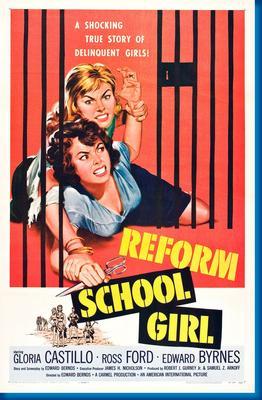
 Few movies capture the loud, chaotic spirit of 1980s cult cinema quite like Reform School Girls.
Part prison movie, part dark comedy, part exploitation film, and part punk-rock fever dream, the movie exploded onto video store shelves in 1986 with neon colors, outrageous violence, over-the-top performances, and enough rebellious energy to feel dangerous even by B-movie standards.
Produced by legendary cult filmmaker Roger Corman and directed by Tom DeSimone, Reform School Girls took the old “women in prison” exploitation formula and cranked everything up to absurd levels. It mixed satire, camp, social commentary, punk aesthetics, and cartoonishly cruel authority figures into one of the strangest cult movies of the VHS era.
For many late-night cable viewers and horror fans growing up during the 1980s and 1990s, the film became unforgettable.
Not because it was subtle.
Because it absolutely was not.
The Plot: Juvenile Detention Turns Into Total Chaos
The movie follows Jenny, played by Linda Carol, a teenager sent to a brutal reform school after accidentally killing a predatory teacher during an attempted assault.
Once inside the institution, Jenny enters a nightmare world ruled by corrupt guards, violent inmates, humiliating punishments, and nonstop psychological warfare.
At the center of the chaos stands the terrifying Edna, played by cult movie icon Pat Ast, who runs the facility with sadistic cruelty. The school itself operates less like a correctional institution and more like a dystopian prison camp where abuse and humiliation are routine.
Jenny quickly finds herself caught between rival inmates, abusive authority figures, and constant threats of violence.
Then things somehow get even crazier.
Roger Corman and Exploitation Cinema
To understand Reform School Girls, you have to understand Roger Corman.
Roger Corman was one of the most important figures in cult movie history. Often called “The King of the B-Movies,” Corman built an empire producing inexpensive genre films packed with:
- Violence
- Horror
- Science fiction
- Sex appeal
- Social rebellion
- Wild concepts
But Corman was smarter than many people realized.
Beneath the exploitation elements, his films often reflected genuine social anxieties and cultural trends. He also launched the careers of countless major filmmakers and actors.
By the 1980s, the direct-to-video market gave Corman enormous freedom to create outrageous low-budget films aimed directly at VHS audiences.
Reform School Girls became one of the defining examples of that era.
The Women-in-Prison Genre
The movie belongs to the infamous “women-in-prison” exploitation subgenre.
These films typically featured:
- Corrupt institutions
- Sadistic guards
- Rebellious inmates
- Brutal punishments
- Escape attempts
- Explosive revenge
The genre existed for decades, especially during the 1970s and 1980s, combining melodrama, exploitation, and social rebellion into highly stylized entertainment.
What makes Reform School Girls different is how self-aware and exaggerated it becomes.
The movie does not pretend realism matters.
Instead, it embraces camp, absurdity, and comic-book-style excess. Every authority figure is grotesquely corrupt. Every punishment feels intentionally theatrical. The performances swing wildly between menace and dark comedy.
The result feels less like a prison drama and more like punk-rock satire.
Pat Ast Steals the Entire Movie
The film’s secret weapon is Pat Ast.
As the monstrous Edna, Ast delivers one of the most gloriously over-the-top villain performances in cult cinema history. She screams, threatens, humiliates, and terrorizes inmates with such cartoonish intensity that she becomes both horrifying and bizarrely funny at the same time.
Her performance transforms the movie.
Without Ast, Reform School Girls might have been just another forgotten exploitation film. Instead, Edna becomes a larger-than-life monster perfectly suited to the movie’s chaotic tone.
She dominates every scene she appears in.
Punk Rock Energy
One reason the film developed such a strong cult following is because it feels deeply connected to 1980s punk and underground culture.
Everything about the movie screams rebellion:
- Wild fashion
- Aggressive attitudes
- Neon lighting
- Loud music
- Anti-authority themes
- Outrageous dialogue
The movie presents institutional authority as fundamentally corrupt and abusive. The girls may be flawed, violent, or reckless, but the system surrounding them is portrayed as even worse.
This anti-authority attitude resonated strongly with punk audiences and cult film fans during the Reagan-era 1980s.
The film feels angry beneath the comedy.
Dark Comedy and Camp
Although Reform School Girls contains violence and disturbing material, the movie rarely plays completely straight.
Instead, it exists in a strange campy universe where cruelty becomes exaggerated almost to the point of parody. The dialogue is outrageous. The scenarios become increasingly absurd. Characters behave with operatic intensity.
Camp is difficult to explain because it depends on tone.
A camp movie fully commits to ridiculous material without apologizing for it. Reform School Girls understands exactly how outrageous it is and leans into the madness completely.
That self-awareness gives the film personality.
The Music and 1980s Style
Like many cult movies from the mid-1980s, Reform School Girls feels visually trapped inside its era in the best possible way.
The movie overflows with:
- Big hair
- Neon colors
- Synth-heavy music
- Punk-inspired costumes
- MTV-style energy
This aesthetic gives the film a unique charm today.
Modern audiences watching it often feel like they are stepping into a strange alternate-universe version of 1980s America — one built entirely from VHS horror movies, exploitation cinema, and underground music videos.
The soundtrack helps enormously.
The music gives scenes manic momentum while reinforcing the movie’s rebellious tone.
USA Up All Night and Cable TV Fame
For many fans, Reform School Girls became famous through late-night cable television rather than theaters.
Shows like USA Up All Night introduced audiences to bizarre low-budget cult movies throughout the late 1980s and 1990s.
Edited for television but still undeniably weird, Reform School Girls became perfect late-night viewing:
- Loud
- Trashy
- Funny
- Violent
- Completely unpredictable
Viewers stumbling across it at midnight often could not believe what they were watching.
That accidental discovery became part of the film’s legacy.
The Strange Social Commentary Beneath the Chaos
Underneath all the exploitation and absurdity, the movie actually contains some surprisingly harsh criticism of institutional abuse.
The reform school itself is presented as fundamentally broken:
- Corrupt guards
- Psychological cruelty
- Sexual exploitation
- Physical abuse
- Arbitrary punishment
The girls are trapped inside a system supposedly designed to “help” them while actually worsening violence and trauma.
Although the movie exaggerates everything for camp effect, the anger toward abusive authority feels genuine.
This gives the film more substance than many exploitation movies from the same era.
Why the Movie Became a Cult Classic
Reform School Girls survived because it fully embraced its own insanity.
Cult movie fans often love films not because they are polished, but because they are memorable, energetic, and unique. The movie may be messy, but it never feels boring.
Every scene contains:
- Screaming confrontations
- Wild performances
- Ridiculous threats
- Explosive emotional outbursts
- Unexpected humor
The film operates at maximum intensity almost nonstop.
That chaotic energy made it perfect for VHS culture, midnight screenings, and late-night cable television.
The Legacy of the Film
Today, Reform School Girls stands as one of the definitive examples of 1980s exploitation camp.
It represents a very specific era when:
- Low-budget cult films flourished
- VHS stores dominated movie culture
- Punk aesthetics influenced genre cinema
- Filmmakers took bizarre creative risks
The movie also helped preserve the legacy of Roger Corman-style independent filmmaking — movies made quickly, cheaply, and with enormous personality.
Modern studio films rarely feel this strange or unpredictable anymore.
More Than Just Trash Cinema
At first glance, Reform School Girls looks like pure exploitation nonsense.
And in many ways, it absolutely is.
But that chaos is also part of its appeal.
The movie feels alive in a way polished corporate entertainment often does not. It is loud, aggressive, rebellious, and completely unconcerned with respectability.
It embraces excess with total confidence.
And decades later, that wild energy still makes it unforgettable.
Some movies aim for realism.
Some aim for prestige.
Reform School Girls aims for absolute madness — and somehow hits the target perfectly.
This post has already been read 708 times!


