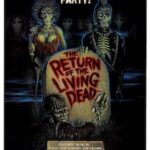
 When people talk about zombie movies, the conversation usually starts with George A. Romero and ends somewhere around modern television shows like The Walking Dead. But sitting right in the middle of zombie history is one gloriously weird, loud, disgusting, hilarious masterpiece that completely reinvented the undead genre for the 1980s.
That movie was The Return of the Living Dead.
Released in 1985, the film exploded onto audiences like a radioactive punk-rock grenade. It mixed horror, comedy, gore, nihilism, and underground music culture into something entirely unique. The movie was terrifying and hilarious at the same time, filled with screaming zombies, dark humor, buckets of slime, and one of the greatest movie soundtracks of the decade.
Most importantly, it changed zombie mythology forever.
Before Return of the Living Dead, zombies shuffled slowly and silently through graveyards. After it, they craved brains.
And horror movies were never quite the same again.
A Split From Romero’s Zombie Universe
The origins of Return of the Living Dead are strange and confusing even by Hollywood standards.
After Night of the Living Dead became a massive cult success, creative disagreements emerged between Romero and his collaborator John Russo regarding the future of the zombie concept.
Eventually, the rights split into two separate continuities:
- Romero continued making his serious “Dead” films like Dawn of the Dead
- Russo developed the “Living Dead” side independently
This allowed The Return of the Living Dead to exist as its own bizarre universe.
The movie cleverly opens by claiming the events of Night of the Living Dead were based on a true story the government tried covering up. According to the film, military chemicals called Trioxin accidentally created the zombie outbreak.
From there, absolute chaos begins.
The Plot: One Terrible Mistake
The setup is brilliantly simple.
At a medical supply warehouse in Louisville, Kentucky, nervous new employee Freddy is being trained by warehouse foreman Frank. While joking about old rumors involving military barrels connected to the “true” events of Night of the Living Dead, Frank accidentally releases toxic Trioxin gas from a sealed container.
That gas reanimates the dead.
At first, the situation seems manageable. Then the corpses become harder to kill. Then more bodies rise. Then the rain itself spreads the chemical contamination into a nearby cemetery.
Soon an army of screaming zombies overruns the town.
The film escalates beautifully from goofy workplace comedy into apocalyptic nightmare.
Fast Zombies Before Fast Zombies Were Cool
One of the most revolutionary things about Return of the Living Dead was its zombies.
Romero’s zombies moved slowly and mindlessly. The creatures in Return were different:
- They talked
- They planned
- They ran
- They used tools
- They trapped victims
- They called for help on police radios
Worst of all, they could barely be stopped.
Destroying the brain — the classic zombie solution — did not work reliably anymore. Cutting zombies apart only created multiple moving body parts. The creatures felt horrifyingly unstoppable.
This gave the film genuine tension beneath all the comedy.
The zombies in Return of the Living Dead are funny right up until they become deeply disturbing.
“Brains!”
Of course, the movie’s biggest contribution to pop culture was introducing the now-iconic zombie obsession with brains.
Before this film, zombies did not specifically eat brains.
Return of the Living Dead changed everything.
The creatures explain that eating brains temporarily eases the agony of being dead. It is simultaneously hilarious and horrifying because the zombies are aware of their suffering. They are not mindless monsters — they are trapped corpses desperately trying to relieve unimaginable pain.
That small idea made the zombies strangely tragic.
And it permanently reshaped zombie culture forever.
Today, the brain-eating zombie cliché is everywhere because of this movie.
Punk Rock Horror
Few horror movies capture the spirit of the 1980s underground scene better than Return of the Living Dead.
The film is soaked in punk culture:
- Mohawks
- Leather jackets
- Trashy fashion
- Graveyard parties
- Rebellious energy
- Loud music
- Anti-authority attitude
The punk characters initially seem like stereotypes, but the movie gives them surprising personality and vulnerability. Their sarcastic humor and reckless behavior fit perfectly within the film’s chaotic tone.
The soundtrack became legendary among horror fans.
Featuring bands like:
- The Cramps
- 45 Grave
- TSOL
the music gave the movie an identity unlike almost any other zombie film.
The soundtrack feels dirty, loud, and dangerous — exactly like the movie itself.
The Tar Man
Every great horror movie needs unforgettable monsters, and Return of the Living Dead delivered one of the greatest creature designs of the 1980s: the Tar Man.
Covered in black slime and looking like a melting corpse, the Tar Man emerges from the darkness mumbling “Brains…” in one of horror cinema’s most iconic moments.
The creature remains terrifying decades later because of its physical design. This was the golden age of practical effects, and the movie uses makeup, puppetry, animatronics, and slime effects brilliantly.
Unlike modern CGI-heavy horror, the monsters feel physically present.
You can almost smell the decay coming off the screen.
Horror and Comedy Perfectly Balanced
Many horror-comedies fail because they lean too heavily toward either horror or comedy.
Return of the Living Dead somehow balances both perfectly.
The movie is genuinely funny:
- Dark workplace humor
- Ridiculous misunderstandings
- Sarcastic dialogue
- Absurd zombie situations
But it is also genuinely horrifying.
Characters panic realistically. Death feels painful. The zombies are relentless. By the end, the film becomes surprisingly bleak.
This balance gives the movie lasting power. Audiences laugh one minute and feel uncomfortable the next.
That tonal instability becomes part of the experience.
The Movie’s Nihilistic Ending
Unlike many horror films that restore order by the final scene, Return of the Living Dead spirals toward complete hopelessness.
As the outbreak worsens, authorities make catastrophic decisions that only spread the contamination further. The ending suggests the situation may be impossible to contain.
For a movie filled with comedy, the conclusion becomes remarkably dark.
This nihilism fit perfectly within the cynical atmosphere of the 1980s:
- Distrust of government
- Nuclear anxiety
- Fear of chemical disasters
- Punk anti-establishment attitudes
The film essentially argues that authorities are just as dangerous as the monsters.
Dan O’Bannon’s Direction
A huge reason the movie works so well is director Dan O’Bannon.
O’Bannon already had legendary science-fiction and horror credentials from co-writing Alien. He understood how to mix humor, tension, and grotesque imagery without losing pacing.
His direction keeps the movie moving constantly.
The film rarely slows down. Once the outbreak begins, the story descends into louder and crazier chaos with almost cartoon-like energy.
Yet somehow it never completely loses its horror atmosphere.
That balance is incredibly difficult to achieve.
Why the Movie Became a Cult Classic
The Return of the Living Dead became a cult classic because it offered something different from nearly every horror movie around it.
It was:
- Smarter than most exploitation horror
- Funnier than most zombie films
- More punk than mainstream horror
- Gorier than studio movies
- More self-aware without becoming parody
The movie respected horror while still having fun with it.
Fans connected deeply with its rebellious energy. It felt messy, loud, sarcastic, and alive in ways polished Hollywood productions often did not.
The film also aged remarkably well because practical effects hold up better than many early digital effects.
The zombies still look disgusting.
The soundtrack still rules.
And the humor still lands.
The Legacy of the Film
Today, The Return of the Living Dead stands as one of the most influential zombie movies ever made.
It helped inspire:
- Horror-comedies like Shaun of the Dead
- Fast-moving intelligent zombies
- Punk horror aesthetics
- Brain-eating zombie mythology
- Self-aware horror storytelling
The movie also proved zombie films could evolve beyond Romero’s original formula while still remaining terrifying.
Without Return of the Living Dead, modern zombie culture would look very different.
More Than Just a Zombie Movie
At first glance, The Return of the Living Dead looks like chaotic B-movie insanity.
And it absolutely is.
But beneath the screaming zombies, exploding heads, punk rock soundtrack, and black humor lies one of the most creative horror films of the 1980s. It took familiar horror ideas and twisted them into something fresh, unpredictable, and unforgettable.
The movie feels dangerous in the best possible way.
It is loud.
It is gross.
It is hilarious.
And forty years later, the dead are still screaming for brains.
This post has already been read 767 times!


