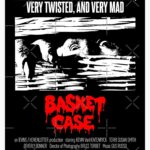
 Some horror movies become famous because they are terrifying.
Others become famous because they are shocking.
And then there are movies like Basket Case — films so strange, uncomfortable, low-budget, and completely original that they evolve into full-blown cult legends.
Released in 1982 and directed by underground filmmaker Frank Henenlotter, Basket Case arrived during the golden age of grindhouse and VHS horror. It looked cheap, felt dirty, and operated with the chaotic energy of a movie that should not even exist.
And that is exactly why horror fans loved it.
At its core, Basket Case tells the bizarre story of a young man carrying his deformed mutant twin brother around New York City in a wicker basket while seeking revenge against the doctors who separated them as children.
Yes, that is the plot.
And somehow, incredibly, it works.
More than forty years later, Basket Case remains one of the defining cult horror films of the 1980s — a grotesque blend of exploitation cinema, black comedy, psychological horror, monster movie madness, and sleazy New York atmosphere.
It is weird.
It is disturbing.
It is hilarious.
And it is unforgettable.
The Story of Duane and Belial
The film follows Duane Bradley, played by Kevin Van Hentenryck, a quiet young man arriving in New York City carrying a mysterious wicker basket.
Inside the basket is Belial — Duane’s formerly conjoined twin brother, surgically removed during childhood and discarded as a monstrous deformity by doctors.
Belial is not exactly human.
He is a screaming, violent creature with claws, fangs, and an uncontrollable temper. Yet Duane and Belial share a psychic and emotional connection so deep they function almost like a single fractured person.
Together, they hunt down the medical professionals responsible for separating them.
The revenge premise gives the film structure, but Basket Case is really about obsession, loneliness, codependency, trauma, and identity — all wrapped inside a disgusting exploitation horror package.
The New York Grindhouse Atmosphere
One reason Basket Case became legendary is its setting.
The movie captures early-1980s New York City at its grimiest:
- Cheap hotels
- Dirty streets
- Graffiti-covered buildings
- Flickering neon
- Run-down neighborhoods
- Strange nightlife
This was pre-Disneyfied Manhattan — the New York of grindhouse theaters, punk clubs, peep shows, and urban decay.
The film feels sweaty and claustrophobic. Almost every location appears sticky, filthy, or barely functional. That atmosphere becomes essential to the movie’s identity.
Modern horror films often look polished and overly clean.
Basket Case looks contaminated.
And that grime gives it authenticity.
Frank Henenlotter’s Unique Vision
Director Frank Henenlotter brought a very unusual sensibility to horror cinema.
Unlike filmmakers chasing prestige or mainstream success, Henenlotter embraced exploitation movie traditions completely:
- Sleaze
- Black humor
- Body horror
- Urban weirdness
- Grotesque imagery
- Dark comedy
But he also understood character psychology surprisingly well.
Underneath the monster effects and absurdity, Basket Case contains genuine emotional pain. Belial is horrifying, but he is also tragic — rejected by society, mutilated, and emotionally dependent on his brother.
Duane is equally damaged.
Their relationship becomes the emotional core of the movie.
Belial: One of Horror’s Weirdest Monsters
Belial remains one of the strangest creatures in horror history.
Created through practical effects, puppetry, stop-motion animation, and sheer low-budget creativity, Belial looks grotesque and oddly sympathetic at the same time.
The creature design feels imperfect in ways that actually help the film. Belial moves unpredictably and unnaturally, which makes him more unsettling.
The famous stop-motion attack scenes became iconic among cult horror fans because of their manic energy. Belial does not move like a polished Hollywood monster.
He thrashes.
He screams.
He explodes across the screen like pure chaos.
That unpredictability makes him memorable.
Exploitation Horror at Its Best
Basket Case belongs firmly within the exploitation horror tradition.
Exploitation cinema focused on:
- Shocking concepts
- Taboo subjects
- Graphic violence
- Weird imagery
- Emotional intensity
But the best exploitation films also possessed imagination.
Anyone could make a cheap slasher movie. Few filmmakers could create something as bizarrely original as Basket Case.
The film combines:
- Monster horror
- Revenge thriller
- Psychological breakdown
- Black comedy
- Urban nightmare
into something that feels completely unique.
The Horror of Codependency
One reason Basket Case works surprisingly well emotionally is because the relationship between Duane and Belial feels genuinely tragic.
They are physically separated but psychologically inseparable.
Duane desperately wants a normal life, especially after developing a relationship with a woman named Sharon. But Belial becomes jealous, violent, and emotionally unstable whenever Duane attempts independence.
The movie transforms sibling attachment into body horror.
Belial essentially represents the parts of Duane he cannot escape:
- Trauma
- guilt
- dependency
- rage
- isolation
This gives the movie unexpected emotional depth beneath all the gore and madness.
The Low-Budget Energy
Part of what makes Basket Case so beloved is how obviously low-budget it is.
The movie reportedly cost very little to make, and nearly every frame reflects creative improvisation rather than expensive production design.
Yet instead of hurting the movie, the cheapness becomes part of its charm.
The film feels handmade:
- Rough editing
- Guerrilla-style filming
- Homemade creature effects
- Real New York locations
- Chaotic performances
There is an anarchic energy to the filmmaking that modern studio horror often lacks.
The movie feels dangerous because it feels uncontrolled.
Midnight Movie Perfection
Basket Case became one of the ultimate midnight movies.
Midnight movies thrive on:
- Weirdness
- audience reactions
- cult discovery
- communal laughter and shock
Watching Basket Case with a crowd transforms the experience. People laugh, cringe, gasp, and stare in disbelief at what they are witnessing.
The movie constantly balances horror and absurdity so aggressively that viewers are never entirely sure how seriously to take anything.
That tonal instability became part of its magic.
VHS and Cult Horror Fame
Like many cult classics, Basket Case exploded in popularity through VHS rentals and cable television.
During the 1980s, horror fans wandered video store aisles searching for the strangest cover art imaginable. Basket Case immediately stood out because the title and poster were impossible to ignore.
The film developed a reputation through word-of-mouth:
“You have to see this insane movie about a monster in a basket.”
That curiosity helped transform it into a genuine cult phenomenon.
Late-night cable broadcasts and horror conventions kept the movie alive long after its original release.
The Influence on Horror Cinema
Although Basket Case never became mainstream Hollywood horror, its influence spread widely through underground genre filmmaking.
The movie helped inspire:
- Body horror comedies
- Monster sympathy narratives
- Weird independent horror
- Grindhouse revival films
- Horror-comedy hybrids
It also proved horror audiences would embrace films that were deeply strange rather than formulaic.
Without movies like Basket Case, later cult filmmakers might never have received opportunities to push horror into increasingly bizarre territory.
The Sequels Get Even Stranger
Naturally, the success of Basket Case eventually produced sequels:
- Basket Case 2
- Basket Case 3: The Progeny
Remarkably, the sequels became even weirder than the original.
Frank Henenlotter leaned fully into grotesque comedy and monster absurdity, turning the franchise into something resembling a carnival freak-show nightmare crossed with family melodrama.
While divisive among fans, the sequels reinforced the franchise’s cult reputation.
Why Basket Case Endures
Today, Basket Case survives because it offers something modern horror often struggles to replicate:
personality.
The film feels completely unique.
It is ugly, funny, uncomfortable, tragic, disgusting, and strangely heartfelt all at once. No studio committee could have manufactured something this bizarre.
Cult horror fans treasure movies that take creative risks, even messy ones.
And Basket Case takes risks constantly.
More Than Just a Monster Movie
At first glance, Basket Case looks like pure exploitation trash:
a mutant creature hiding in a basket while murdering doctors.
But beneath the gore and insanity lies a surprisingly emotional story about abandonment, trauma, loneliness, and emotional dependency.
That emotional core gives the movie lasting power.
It is still outrageous.
Still grotesque.
Still hilariously weird.
But it also has a strange humanity buried underneath the slime and screaming.
And that combination turned Basket Case from a cheap grindhouse oddity into one of the greatest cult horror films ever made.
This post has already been read 734 times!


