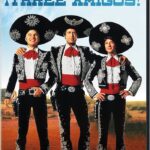
 Few comedies from the 1980s have maintained the lasting appeal of Three Amigos! Released in 1986 and directed by John Landis, the film brought together three comedy giants at the height of their powers: Steve Martin, Chevy Chase, and Martin Short. What could have easily been a simple star vehicle became something much more enduring—a clever parody of westerns, Hollywood ego, and heroic adventure films wrapped in an endlessly quotable comedy.
More than three decades later, Three Amigos! remains one of the most beloved cult comedies of its era. While it was not a massive blockbuster upon release, its reputation has only grown through cable television, home video, and streaming. Audiences continue to discover the charm of Lucky Day, Dusty Bottoms, and Ned Nederlander, three silent-film cowboys who accidentally find themselves facing real danger in Mexico after being mistaken for actual heroes.
The premise is delightfully absurd. In the 1910s, the Three Amigos are silent movie stars whose popularity has begun to fade. After being fired from their studio, they receive what they believe is an invitation to perform a paid appearance in a Mexican village. The villagers, however, believe the Amigos are genuine gunfighters who can save them from the terror of the notorious bandit El Guapo. Unaware of the misunderstanding, the trio arrives expecting applause and a paycheck, only to discover they have stumbled into a genuine life-or-death situation.
The brilliance of the film begins with this setup. The Amigos are actors who spend their lives pretending to be brave. Their journey forces them to become the very heroes they have spent years portraying on screen. It is a classic fish-out-of-water story, but one that never loses sight of its comedic roots.
Steve Martin anchors the film as Lucky Day, the confident and self-appointed leader of the trio. Martin’s performance is a perfect showcase of his comic talents. Lucky is vain, self-important, and frequently oblivious to reality, yet Martin makes him oddly lovable. His ability to deliver ridiculous dialogue with complete sincerity gives many of the film’s funniest moments their impact.
Chevy Chase, meanwhile, plays Dusty Bottoms with his trademark dry wit. Chase had already established himself as one of the biggest comedy stars of the decade, and his relaxed style provides a perfect counterbalance to Martin’s energetic absurdity. Dusty often appears to be the most level-headed of the Amigos, though that isn’t saying much considering the collective intelligence of the group.
Martin Short arguably steals the movie as Ned Nederlander. Short’s boundless enthusiasm and expressive physical comedy make nearly every scene he’s in memorable. Whether he’s misunderstanding situations, singing, or reacting with childlike excitement, Short brings an infectious energy that elevates the entire film. His performance remains one of the most beloved comedic turns of his career.
What makes the trio work so well is their chemistry. The film understands that comedy often comes from personality clashes and shared delusions. The Amigos spend much of the movie reinforcing one another’s misunderstandings, creating a cascade of increasingly ridiculous situations. Their friendship feels genuine despite their constant bickering, and that camaraderie is essential to the film’s success.
One of the movie’s greatest strengths is its willingness to embrace silliness without becoming completely cartoonish. The humor ranges from slapstick and visual gags to clever dialogue and satire. A running joke involves the Amigos treating real-life danger as though it were merely another movie production. They repeatedly fail to recognize obvious threats because they assume everyone around them is acting.
This concept reaches some of its funniest moments when the Amigos encounter El Guapo and his gang. Even when faced with armed bandits, they continue behaving as if they are performing for an audience. The disconnect between perception and reality fuels much of the film’s comedy and allows the story to maintain a playful tone even during moments of genuine peril.
Another major highlight is the performance of Alfonso Arau as El Guapo. Rather than portraying the villain as a terrifying monster, Arau creates a character who is both threatening and strangely charming. El Guapo is capable of cruelty, but he also possesses a surprising sense of humor and a memorable personality. His scenes provide some of the movie’s most quotable dialogue and help elevate the film beyond a simple good-versus-evil narrative.
The screenplay deserves significant credit as well. Written by Steve Martin, Lorne Michaels, and Randy Newman, it combines sharp comedic instincts with affectionate parody. The film pokes fun at western clichés while simultaneously celebrating them. It understands why audiences love heroic stories even as it highlights how unrealistic many of those stories can be.
This balance between satire and affection gives Three Amigos! its unique tone. The filmmakers clearly enjoy the traditions of classic westerns. The dusty villages, horseback rides, heroic showdowns, and larger-than-life villains are all present. Yet every convention is filtered through the lens of comedy. Rather than mocking the genre outright, the film playfully exaggerates its familiar elements.
The musical sequences add another layer of charm. Randy Newman’s songs fit perfectly within the movie’s whimsical atmosphere. The infamous “My Little Buttercup” performance remains one of the most memorable scenes in the film. The sequence is completely ridiculous, yet it somehow works because the actors commit to it with complete sincerity. It is exactly the kind of moment that defines the movie’s appeal: absurd, unexpected, and impossible to forget.
Visually, the film captures the feel of a classic western while maintaining its comedic identity. The Mexican landscapes provide an authentic backdrop for the adventure, and the production design effectively recreates the look of both old Hollywood westerns and rural villages. Director John Landis keeps the pacing brisk and allows the performers room to shine without overwhelming the story with excessive visual gimmicks.
Watching the movie today also offers an interesting glimpse into a different era of comedy. Modern comedies often rely heavily on improvisation or rapid-fire pop culture references. Three Amigos! takes a more traditional approach. The jokes are rooted in character, situation, and timing. As a result, much of the humor remains surprisingly timeless.
That said, some aspects of the film reflect the sensibilities of the 1980s and may not resonate equally with every contemporary viewer. Certain jokes and stereotypes feel dated when viewed through a modern lens. However, the film’s overall good-natured spirit helps it avoid many of the pitfalls that have caused other comedies from the same era to age poorly.
Perhaps the greatest testament to Three Amigos! is how frequently fans continue to quote it. Lines from the film have become part of comedy culture, and many viewers can recite entire scenes from memory. The movie possesses that rare quality shared by the best comedies: familiarity only seems to make it funnier. Rewatching reveals new details, background jokes, and character moments that may have been missed the first time.
The film’s lasting popularity can also be attributed to its underlying message. Beneath the jokes lies a surprisingly heartfelt story about courage. The Amigos begin as self-absorbed performers who live in a world of make-believe. Over the course of the film, they discover genuine bravery and learn that heroism is not about costumes, applause, or reputation. It is about helping others when it matters most. While the movie never becomes sentimental, this emotional core gives the comedy additional weight.
In the end, Three Amigos! succeeds because it understands exactly what it wants to be. It is a goofy adventure, a western parody, and a celebration of friendship all at once. The film never pretends to be sophisticated or groundbreaking, but it delivers laughter with remarkable consistency. Steve Martin, Chevy Chase, and Martin Short create a comedic trio that remains one of the most entertaining ensembles in movie history, while John Landis crafts a film that balances absurdity and heart with impressive skill.
For anyone who loves classic comedy, Three Amigos! remains essential viewing. It is funny, endlessly quotable, surprisingly warm-hearted, and packed with memorable performances. More than forty years after its release, the Amigos still ride proudly across the comedy landscape, proving that sometimes the most unlikely heroes make the most memorable legends.
This post has already been read 722 times!


